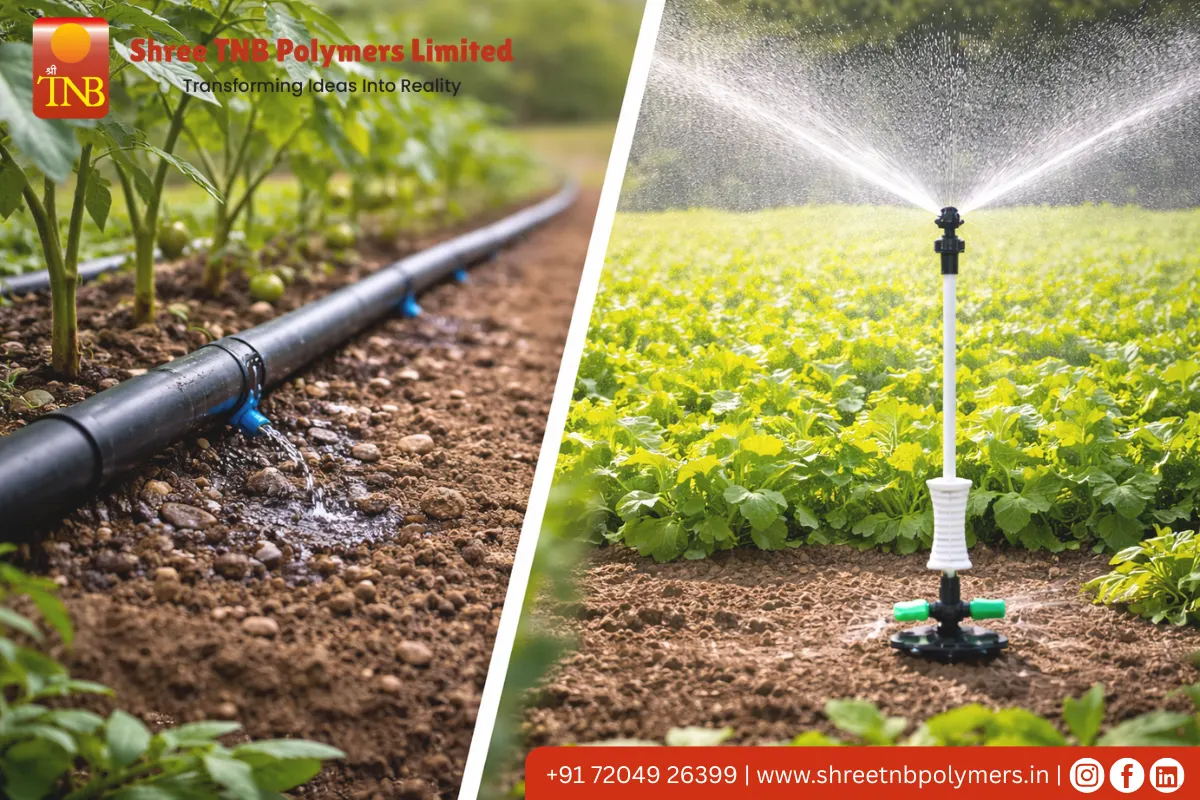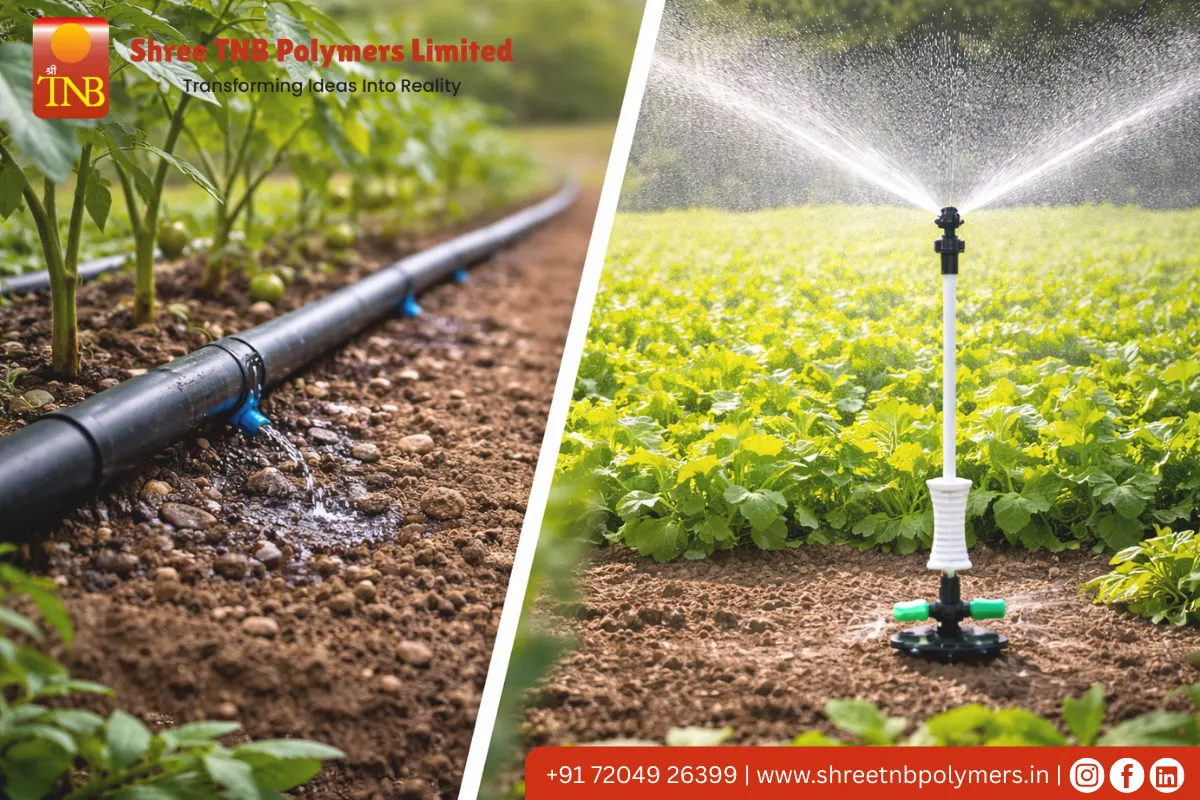
Efficient irrigation plays a crucial role in modern farming. Choosing the right system not only improves crop growth but also ensures better water management and long-term productivity.
Farmers often compare drip irrigation vs sprinkler irrigation to understand which method is more suitable for their crops. While both irrigation systems are widely used, the final choice depends on crop type, land size, and how well the irrigation setup is designed.
In addition to selecting a method, using the right irrigation components such as sprinklers, filters, and fittings is equally important for achieving consistent results.
What is Drip Irrigation?
Drip irrigation is a method where water is delivered directly to the plant roots through a network of pipes, emitters, and connectors. This approach allows precise water application and reduces wastage.
Key Products Used in Drip Irrigation
A complete drip irrigation setup includes:
- Drip lines and lateral systems
- Emitters and connectors
- Filtration systems
- Control valves
Key Advantages of Drip Irrigation
- Direct water delivery to root zone
- Minimizes water loss
- Supports efficient nutrient absorption
- Suitable for crops requiring controlled irrigation
Limitations of Drip Irrigation
- Requires proper filtration
- Needs careful system planning
- Not always ideal for large open fields
What is Sprinkler Irrigation?
Sprinkler irrigation distributes water across the field through spray systems, providing coverage similar to natural rainfall. It is commonly used in large agricultural areas and for crops requiring uniform watering.
Key Products Used in Sprinkler Irrigation
A complete sprinkler irrigation system includes:
- Sprinkler heads
- Filtration units
- Pipe fittings such as tees, elbows, and couplers
- Valves and connectors
Key Advantages of Sprinkler Irrigation
- Covers large areas efficiently
- Suitable for multiple crop types
- Works well on uneven land
- Flexible irrigation setup
Limitations of Sprinkler Irrigation
- Water distribution may be affected by wind
- Requires proper pressure control
- Slightly less targeted compared to drip systems
Drip vs Sprinkler Irrigation Difference
Understanding the difference between drip and sprinkler irrigation systems helps in selecting the right solution for your farm.
Factor | Drip Irrigation | Sprinkler Irrigation
Water Delivery | Root-level | Overhead spray
Coverage | Targeted | Wide area
Efficiency | High | Moderate
Crop Suitability | Fruits, vegetables | Field crops
System Setup | Fixed | Flexible
This comparison explains the practical sprinkler vs drip irrigation difference in farming applications.
Which Irrigation System is Best for Your Crops?
Choosing the best irrigation system depends on crop requirements and farm conditions.
Vegetables and Row Crops
Drip irrigation systems provide precise water control and better growth.
Field Crops
Sprinkler irrigation systems are more suitable due to wide coverage.
Orchards and Plantation Crops
Targeted irrigation helps maintain proper soil moisture.
Large Farms
Sprinkler systems offer better efficiency and flexibility.
Importance of Quality Irrigation Components
The efficiency of any irrigation system depends on the quality of the products used.
A well-designed system includes:
- Reliable sprinklers for uniform distribution
- Durable fittings for secure connections
- Efficient filters to prevent clogging
- Proper valves for controlled water flow
Manufacturers such as Shree TNB Polymers Limited provide complete irrigation components and sprinkler solutions designed for agricultural and water management applications, ensuring consistent performance across different farming conditions.
Water Efficiency and System Performance
Modern farming requires efficient irrigation methods that optimize water usage.
- Drip irrigation systems deliver water directly to roots
- Sprinkler irrigation systems provide even coverage across fields
Both systems can improve crop productivity when supported by the right irrigation components and proper system design.
When to Choose Drip Irrigation
Choose drip irrigation when:
- Crops require precise watering
- Water conservation is important
- You are growing vegetables, fruits, or plantation crops
When to Choose Sprinkler Irrigation
Choose sprinkler irrigation when:
- Large areas need uniform coverage
- Crops are grown in open fields
- Flexible irrigation systems are required
Common Mistakes to Avoid
Using Low-Quality Components
Poor-quality fittings and sprinklers can reduce system efficiency.
Poor System Design
Improper layout affects water distribution.
Ignoring Filtration
Lack of proper filters can damage the system.
No Expert Guidance
Choosing the wrong setup without consultation can lead to inefficiency.
Conclusion
Choosing between drip and sprinkler irrigation depends on your farming needs, crop type, and field conditions. Selecting the right combination of irrigation method and high-quality components such as fittings, filters, valves, and sprinklers ensures efficient water delivery, uniform crop growth, reduced wastage, and improved nutrient absorption. Using reliable solutions from trusted manufacturers like Shree TNB Polymers helps farmers achieve better crop performance and long-term productivity.
Gallery