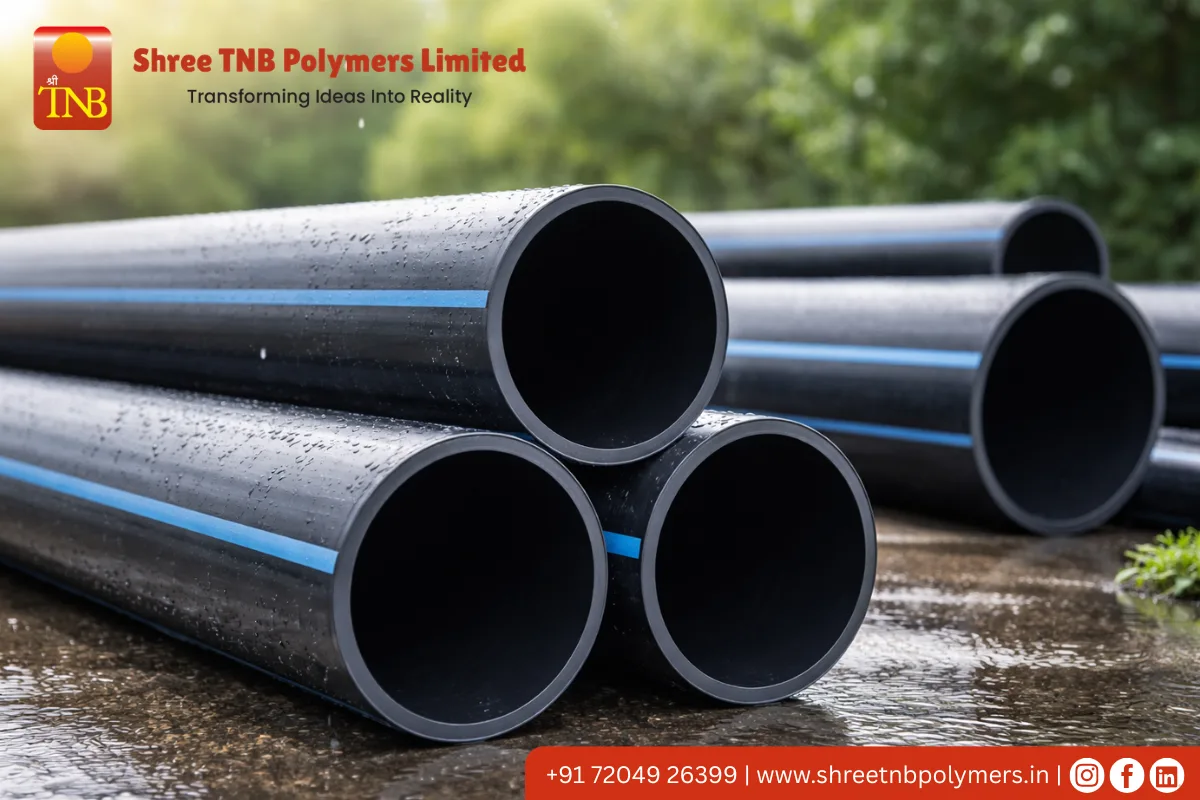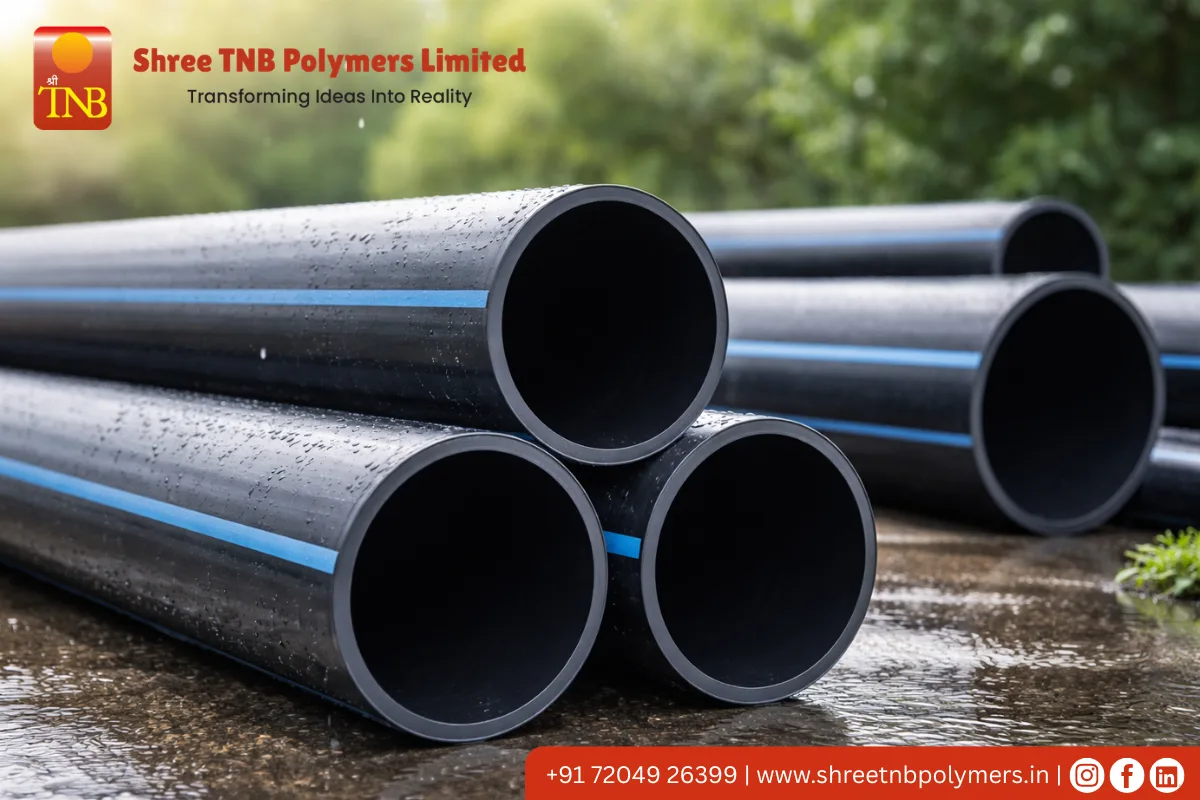
Reliable water infrastructure is essential for municipalities, industries, and agricultural systems. HDPE pipes for water supply have become one of the most preferred piping solutions due to their durability, flexibility, and long operational life.
High-Density Polyethylene (HDPE) pipes are widely used in modern water supply systems because they resist corrosion, maintain water quality, and provide leak-free performance. Their ability to withstand pressure fluctuations and environmental stress makes them suitable for large-scale water distribution networks.
Manufacturers such as Shree TNB Polymers Limited produce HDPE pipes designed for infrastructure, industrial water systems, and irrigation applications.
This article explores the applications of HDPE pipes for water supply systems, their benefits, and why industries prefer them over traditional piping materials.
What Are HDPE Pipes?
High-Density Polyethylene (HDPE) pipes are plastic piping systems manufactured from high-density polyethylene material. These pipes are widely used in water supply networks because of their durability, flexibility, and resistance to corrosion.
HDPE pipes are commonly used for:
- potable water supply systems
- industrial water pipelines
- irrigation infrastructure
- underground water distribution networks
Their strength and leak-proof joint technology make HDPE pipes for water supply a reliable solution for modern water infrastructure.
Applications and Common Uses of HDPE Pipes for Water Supply
HDPE pipes are widely used in modern water infrastructure due to their durability, flexibility, and corrosion resistance. These properties make HDPE pipes for water supply systems suitable for transporting potable water across municipal networks, industrial facilities, and agricultural areas.
Because HDPE piping systems provide leak-free joints and long service life, they are commonly used in projects that require reliable and efficient water distribution.
Municipal Water Supply Systems
Municipal authorities use HDPE pipes to distribute drinking water across residential and commercial areas. Their corrosion resistance and fusion-welded joints help prevent water leakage and maintain consistent water pressure within large distribution networks.
Key advantages in municipal systems
- Leak-free joints reduce water loss
- Resistant to corrosion and soil chemicals
- Long operational life exceeding decades
- Lower maintenance requirements
Industrial Water Pipelines
Many industries depend on reliable water pipelines for manufacturing processes, cooling systems, and facility maintenance. HDPE pipes are commonly used in industrial environments because they provide excellent chemical resistance and durability.
Common industrial applications
- Process water transport
- Cooling water circulation systems
- Chemical processing facilities
- Food and beverage manufacturing plants
Irrigation and Agricultural Water Systems
Agricultural irrigation systems require flexible and durable pipelines to distribute water efficiently across farmland. HDPE pipes are widely used for drip irrigation and sprinkler systems because they are lightweight, easy to install, and resistant to environmental stress.
Benefits for irrigation infrastructure
- Flexible installation across uneven terrain
- Lightweight and easy to transport
- Reliable performance in outdoor conditions
Underground Water Distribution Networks
Many water pipelines are installed underground to protect infrastructure and maintain system efficiency. HDPE pipes are highly suitable for underground water distribution because they can withstand soil pressure, ground movement, and environmental changes.
Advantages of underground HDPE pipelines
- Excellent resistance to soil corrosion
- Flexibility to tolerate ground movement
- Strong welded joints that prevent leakage
Drainage and Wastewater Systems
In addition to potable water supply, HDPE pipes are also used for drainage and wastewater management systems. Their smooth internal surface allows efficient fluid flow while reducing the risk of blockages and sediment buildup.
Benefits of HDPE Pipes in Water Distribution Networks
HDPE pipes offer several advantages that make them a preferred material for modern water infrastructure systems.
Long Service Life
HDPE pipes are designed to last for decades with minimal maintenance.
Lifecycle advantages
- Reduced replacement costs
- Long-term reliability for infrastructure projects
- Strong resistance to environmental stress
Corrosion and Chemical Resistance
Unlike metal pipelines, HDPE pipes do not rust or corrode.
Resistance benefits
- Resistant to acidic soil conditions
- Resistant to industrial chemicals
- Prevents scaling and mineral buildup
Leak-Free Joint Technology
HDPE pipes are joined using heat fusion welding.
Joint strength advantages
- Creates joints as strong as the pipe itself
- Prevents leakage in water distribution systems
- Improves overall pipeline efficiency
Lightweight and Easy Installation
HDPE pipes are much lighter than steel or concrete pipes.
Installation benefits
- Easier transportation
- Faster installation process
- Reduced labor costs
HDPE Pipes vs Other Water Supply Pipes
Choosing the right pipe material is critical for long-term infrastructure performance.
Comparison with traditional pipe materials
Feature | HDPE Pipes | Metal Pipes | Concrete Pipes
Corrosion Resistance | Excellent | Low | Moderate
Flexibility | High | Low | Very Low
Installation Cost | Lower | High | High
Leak Resistance | Very High | Moderate | Moderate
Service Life | 50+ Years | 20–30 Years | 30–40 Years
Why HDPE performs better
HDPE pipes offer superior durability, flexibility, and leak protection compared to many traditional piping materials.
Why Industries Prefer HDPE Pipes for Water Supply
Industries and infrastructure developers increasingly choose HDPE pipes because they combine durability, efficiency, and sustainability.
Key Reasons Industries Choose HDPE Pipes for Water Supply
Industries and infrastructure developers prefer HDPE pipes for water supply because they offer durability, cost efficiency, and environmental sustainability. These advantages make HDPE piping systems suitable for municipal water networks, industrial pipelines, and agricultural irrigation systems.
Reliability in High-Pressure Water Systems
HDPE pipes maintain strong structural integrity even under high pressure and challenging environmental conditions. Their flexibility allows them to withstand ground movement, pressure fluctuations, and temperature changes. Unlike metal pipes, they do not corrode, ensuring reliable performance in long-distance water distribution systems.
Cost Efficiency in Installation and Maintenance
HDPE pipes are lightweight and flexible, which reduces transportation and installation costs. Heat-fusion joints create leak-free connections, minimizing maintenance and repair expenses. This makes HDPE piping systems a cost-effective solution for large-scale water infrastructure projects.
Environmental Sustainability
HDPE pipes support sustainable water infrastructure because they are recyclable and require less energy during manufacturing and installation. Their leak-free joints help prevent water loss, while their long service life reduces the need for frequent replacements.
Factors to Consider When Choosing HDPE Pipes for Water Supply
When selecting HDPE pipes for water distribution systems, several factors should be evaluated to ensure optimal performance and durability.
Pipe Pressure Rating
The pressure rating determines how much internal pressure the pipe can safely handle in water supply systems.
Pipe Diameter
Selecting the correct pipe diameter ensures efficient water flow and proper system performance.
Installation Environment
Factors such as soil conditions, underground installation, and temperature variations should be considered when choosing HDPE pipes.
Why HDPE Pipes Are the Ideal Choice for Water Supply Systems
Modern water infrastructure requires piping solutions that are durable, efficient, and capable of delivering consistent performance over decades. HDPE pipes for water supply systems meet these requirements by offering excellent corrosion resistance, leak-free joints, long service life, and easy installation.
From municipal water distribution and industrial pipelines to agricultural irrigation systems, HDPE pipes have become an essential component of reliable water infrastructure.
Businesses and infrastructure developers looking for dependable piping solutions can explore the high-quality HDPE pipe products manufactured by Shree TNB Polymers Limited, designed to support efficient and sustainable water distribution networks.
Gallery