



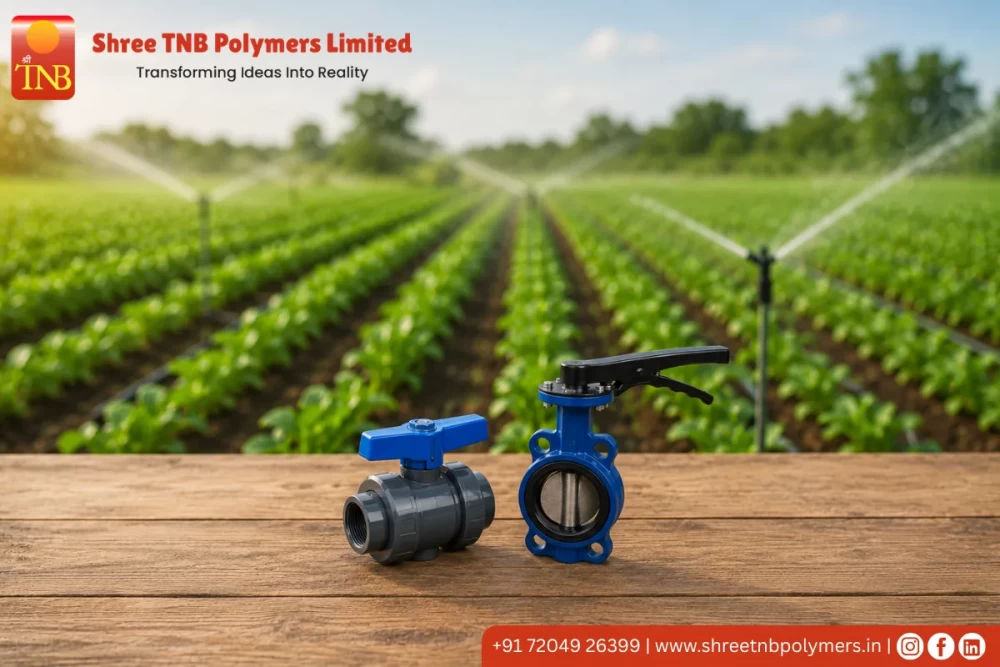
Efficient irrigation is no longer just about delivering water to crops—it's about delivering the right amount of water at the right time and with minimal wastage. As farming practices continue to evolve, modern Agricultural Irrigation Systems are designed to improve productivity while conserving one of agriculture's most valuable resources: water.
While components such as Irrigation Pipes, pumps, and filters often receive most of the attention, Irrigation Valves are equally important. They regulate water flow, maintain system pressure, and ensure that every section of the field receives the required amount of water. Without properly selected valves, even the most advanced irrigation system may struggle to perform efficiently.
Whether you're using a Drip Irrigation System for horticulture or a Sprinkler Irrigation System for large agricultural fields, choosing the right irrigation valve can improve system reliability, reduce water wastage, and lower operating costs.
This guide explains how irrigation valves work, the different types available, and why they are an essential part of every modern irrigation network.
Why Are Irrigation Valves Important?
Irrigation Valves control the movement of water throughout an irrigation system. They help regulate water pressure, manage flow to different zones, automate irrigation schedules, and prevent unnecessary water loss. When combined with quality Irrigation Equipment, valves improve irrigation efficiency, support Precision Irrigation, and contribute to better crop health and higher productivity.
What Are Irrigation Valves?
An Irrigation Valve is a mechanical or automated device that controls the flow of water within an irrigation system. Depending on the application, valves can start or stop water flow, regulate pressure, divide irrigation zones, or direct water to specific crops.
Every irrigation setup—from small farms to large commercial agricultural projects—relies on valves to maintain smooth operation and consistent water distribution.
Today, modern Farm Irrigation Solutions use advanced valve technology to improve efficiency while reducing manual intervention. These valves are widely used in agriculture, horticulture, landscaping, greenhouses, and plantation farming.
How Do Irrigation Valves Improve Agricultural Irrigation Systems?
The primary purpose of irrigation valves is to ensure that water reaches crops efficiently without unnecessary loss.
Better Water Flow Control
One of the biggest advantages of Irrigation Control Valves is accurate Water Flow Control. Instead of allowing water to flow continuously, valves distribute water according to crop requirements and irrigation schedules.
This helps prevent overwatering and ensures uniform irrigation across the field.
Improved Pressure Regulation
Different irrigation systems require different operating pressures.
Proper Pressure Regulation ensures:
- Uniform water distribution
- Better emitter performance
- Reduced leakage
- Longer equipment life
- Improved irrigation efficiency
Pressure fluctuations can reduce the effectiveness of both drip and sprinkler systems, making pressure-regulating valves an essential component.
Efficient Water Distribution
A well-designed irrigation system depends on balanced Water Distribution. Valves help divide large farms into multiple irrigation zones, ensuring every crop receives adequate moisture without affecting the performance of the entire network.
This is especially important in large-scale Agricultural Irrigation Systems where water demand varies across different sections of the farm.
Types of Irrigation Valves
Different farming applications require different valve designs. Choosing the right valve depends on water pressure, flow requirements, automation needs, and crop type.
Ball Valve
A Ball Valve uses a rotating ball with a central opening to control water flow.
It is commonly used because it:
- Offers quick operation
- Provides reliable sealing
- Requires minimal maintenance
- Works well in irrigation pipelines
Ball valves are suitable for both manual and automated irrigation systems.
Butterfly Valve
A Butterfly Valve regulates water using a rotating disc positioned inside the pipeline.
These valves are widely used in larger irrigation networks because they are:
- Lightweight
- Compact
- Easy to operate
- Suitable for large-diameter pipelines
They are commonly found in commercial farms and irrigation infrastructure projects.
Why Modern Farms Depend on Irrigation Valves
Today's farming practices focus on producing more with fewer resources. Reliable Agricultural Irrigation Equipment helps farmers achieve this goal by improving efficiency and reducing operating costs.
Quality Irrigation Valves help:
- Improve irrigation efficiency
- Reduce water wastage
- Support Crop Water Management
- Enhance Water Conservation in Agriculture
- Increase system reliability
- Minimize maintenance
- Improve long-term productivity
Instead of treating valves as a small accessory, successful farmers consider them one of the most important Irrigation System Components for maintaining efficient and dependable irrigation systems.
How Irrigation Valves Improve Drip and Sprinkler Irrigation Systems
Every irrigation method has different water requirements, which is why selecting the right Irrigation Valves is essential for achieving maximum performance.
Drip Irrigation System
A Drip Irrigation System delivers water slowly and directly to the root zone of crops. Since drip irrigation operates at relatively low pressure, maintaining consistent water flow is critical.
By using the right Irrigation Control Valves, farmers can:
- Control water flow to different crop zones.
- Maintain uniform pressure across irrigation lines.
- Prevent water wastage.
- Improve fertilizer application through fertigation.
- Increase overall irrigation efficiency.
Properly selected valves also help extend the life of drip lines, filters, and emitters by preventing sudden pressure fluctuations.
Sprinkler Irrigation System
A Sprinkler Irrigation System distributes water over crops in a controlled spray pattern. Because sprinklers require balanced pressure for uniform coverage, irrigation valves play a major role in system performance.
Quality valves help:
- Maintain even water pressure.
- Control multiple irrigation zones.
- Improve sprinkler performance.
- Reduce water loss caused by excessive pressure.
- Support efficient operation across large agricultural fields.
Whether you're irrigating open fields, orchards, or commercial farms, the right valve ensures consistent water application throughout the irrigation cycle.
Smart Irrigation Starts with Better Valve Control
Modern farming is moving towards Smart Irrigation, where irrigation schedules are based on crop requirements, soil moisture, and weather conditions rather than manual operation.
In these systems, Solenoid Valves are connected to irrigation controllers, allowing water flow to be managed automatically.
This approach offers several advantages:
- Automated irrigation scheduling.
- Better Crop Water Management.
- Lower labour requirements.
- Improved water-use efficiency.
- Reduced operational costs.
- Consistent irrigation performance.
When combined with sensors and controllers, irrigation valves become the foundation of Irrigation Automation, helping farmers make more informed decisions while conserving water.
Choosing the Right Irrigation Valve for Your Farm
Not every valve is suitable for every application. Selecting the right product depends on your irrigation method, water source, pipeline size, and operating pressure.
Before you Buy Irrigation Valves, consider the following:
- Type of irrigation system.
- Operating pressure requirements.
- Water quality.
- Pipe diameter.
- Flow rate.
- Automation requirements.
- Ease of maintenance.
- Availability of replacement parts.
Investing in the right valve at the beginning helps avoid unnecessary maintenance costs and improves long-term reliability.
Why the Right Manufacturer and Supplier Matter
Even the best irrigation design depends on the quality of the products used. Choosing a reliable Irrigation Valve Manufacturer ensures consistent performance, product durability, and technical support.
When evaluating an Irrigation Valve Manufacturer in India, look for:
- High-quality manufacturing standards.
- Durable materials suitable for agricultural conditions.
- A complete range of Irrigation Products and Irrigation Accessories.
- Compliance with industry standards.
- Product testing and quality assurance.
- Technical guidance and after-sales support.
Similarly, working with an experienced Irrigation Valve Supplier ensures timely product availability, genuine components, and expert recommendations for your project.
If you're developing a complete irrigation network, sourcing products from a trusted Irrigation System Manufacturer can help ensure compatibility between valves, pipelines, filters, and other irrigation components.
Common Mistakes to Avoid
Many irrigation systems fail to perform efficiently because of incorrect valve selection rather than poor installation.
Avoid these common mistakes:
- Choosing valves based only on price.
- Using the wrong valve size.
- Ignoring operating pressure.
- Installing low-quality components.
- Skipping routine maintenance.
- Not planning for future expansion.
- Mixing incompatible irrigation products.
A well-designed irrigation system is an investment that should deliver reliable performance for many years.
Maintaining Irrigation Valves for Long-Term Performance
Like any agricultural equipment, irrigation valves require regular inspection and maintenance.
Good maintenance practices include:
- Cleaning filters regularly.
- Checking for leaks.
- Inspecting seals and moving parts.
- Removing dirt or debris from valves.
- Testing automated valve operation.
- Monitoring system pressure.
Routine maintenance improves valve life and keeps the entire irrigation system operating efficiently throughout the growing season.
Conclusion
Modern Agricultural Irrigation Systems depend on much more than pumps and pipelines. Irrigation Valves are one of the most important Irrigation System Components, ensuring accurate Water Flow Control, effective Pressure Regulation, and reliable Water Distribution across the farm.
Whether you're installing a Drip Irrigation System for high-value crops or a Sprinkler Irrigation System for larger fields, choosing quality valves can significantly improve irrigation efficiency while supporting Water Conservation in Agriculture.
When planning your next irrigation project, work with a trusted Water Control Valve Manufacturer, experienced Irrigation Valve Supplier, or reliable Irrigation System Manufacturer to ensure your investment delivers long-term performance and value.
Gallery
.webp)